Why Shoe Soles Come Off After Production—and How Manufacturers Can Prevent It
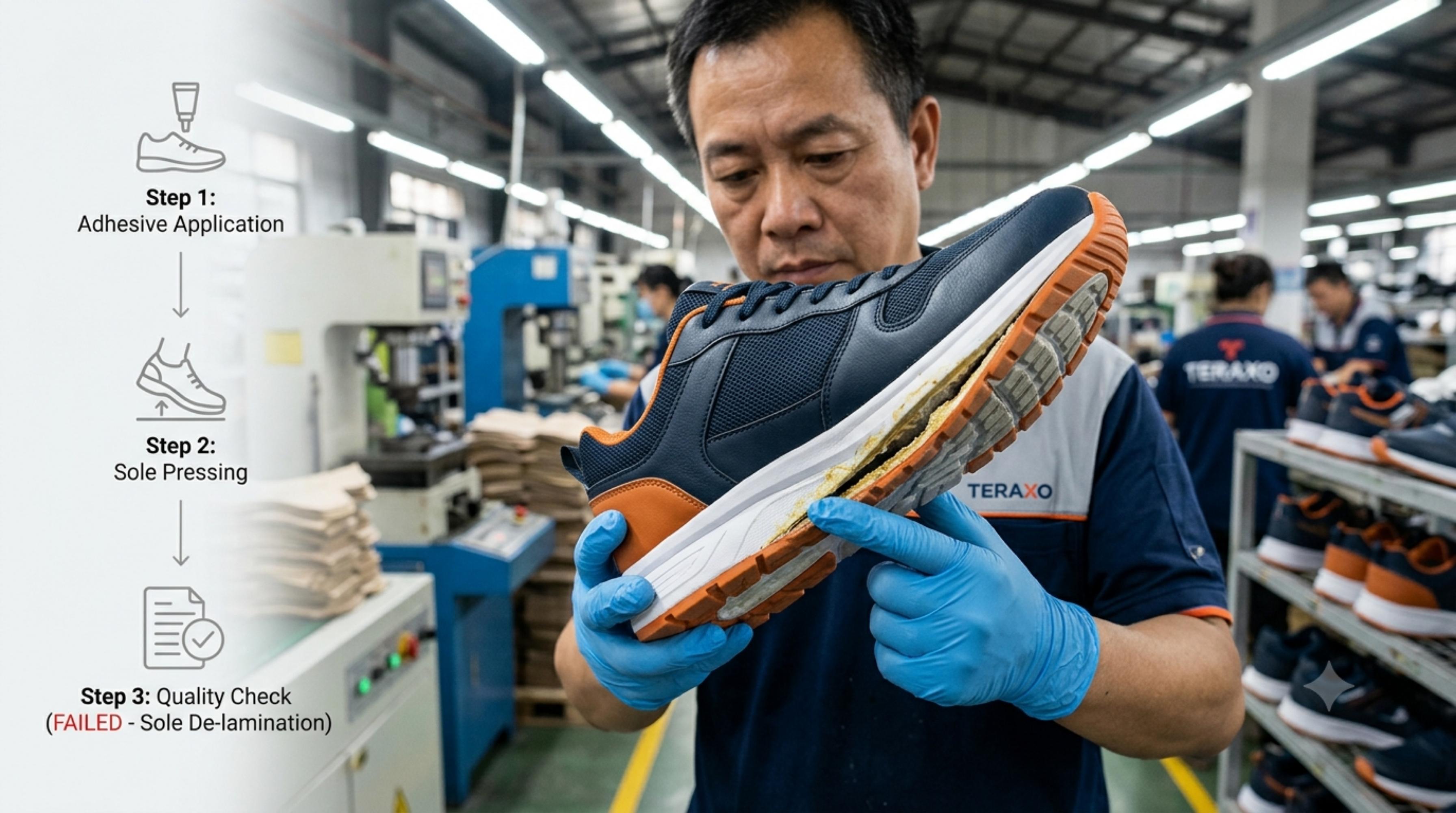
A pair of shoes leaves your factory looking flawless. Six weeks later, it comes back from a retailer with the sole gaping open at the toe. Repeat that a few hundred times and the cost is more than replacement stock: dealers lose confidence, and your brand takes the blame.
Sole separation is among the most common, and most preventable, complaints in footwear. In most cases the cause isn't a "bad batch of glue." It's a mismatch between the materials, the adhesive chemistry and the way the bond is made on the line. This guide explains why soles come off after production, how to diagnose each failure, and how the right adhesive for shoe manufacturing, paired with disciplined process control, brings returns down. Whether you already buy from a footwear adhesive manufacturer or are still comparing suppliers, treat it as a working checklist.
What Really Happens When a Sole Comes Off
Every bonded sole is a three-part chain: the sole material, the adhesive layer, and the upper (or lasting margin). A joint fails at its weakest link. Finding out which link broke tells you where to fix the process, so examine returned pairs rather than just replacing them.
| What you see on the returned shoeFailure typeUsual cause | ||
| Adhesive stays on the upper, sole surface looks clean | Adhesive failure at the sole | Contamination, no primer, poor wetting |
| Adhesive stays on the sole, upper looks clean | Adhesive failure at the upper | Poor lasting-margin preparation, wrong adhesive for the upper |
| Adhesive splits, residue on both surfaces | Cohesive failure | Under-cure, wrong hardener ratio, film too thin or too thick |
| Sole foam or upper material tears | Substrate failure | Bond outperforms the material, so review material quality |
Seven Reasons Soles Separate After Production
1. Contaminated surfaces. Mould-release agents on rubber and TPR, oils and waxes in leather finishes, buffing dust and plasticiser migrating out of PVC all form an invisible barrier. The adhesive then bonds to the contamination rather than to the sole.
2. Inadequate surface preparation. Smooth soles need roughening. Many synthetic materials, including TPR, PVC and EVA, also need a primer or chemical treatment so the adhesive can wet the surface properly. Skipping this step to save a few seconds per pair is a false economy.
3. The wrong adhesive chemistry. Polyurethane, polychloroprene (neoprene), hot-melt and cyanoacrylate systems each suit different material pairs and different jobs. An adhesive for shoe manufacturing that performs well on leather-to-rubber may fall short on PU or EVA.
4. Open-time and activation errors. Press too early and solvent is still trapped in the film; press too late and the film has lost tack. For heat-activated systems, reactivation temperature matters just as much.
5. Weak or uneven pressing. Both adhesive films must come into full contact. Poorly set pressure or short dwell time leaves weak spots at the toe spring and heel curve, exactly where flexing is greatest.
6. Incorrect hardener ratio. Many solvent-based polyurethane adhesives rely on a crosslinker added at a set percentage. Too little leaves a soft, creeping bond; too much shortens pot life and makes the film brittle.
7. Heat, humidity and rushed dispatch. Shoes packed before the bond reaches full strength are the classic source of "failed in the first month" complaints. Warm, humid storage and monsoon-season transit add stress. Note that some PU soles hydrolyse and crumble with age. That looks like adhesive failure but is really a sole-material problem.
How to Choose the Right Adhesive for Sole Bonding
There is no single glue for every sole. The best adhesive for sole bonding depends on five things: the sole and upper materials, the assembly method, the flexibility the shoe needs, the climate where it will be worn, and your solvent or VOC limits.
The table below lists common starting points. Always confirm them with peel-strength trials on your own materials.
| Sole materialTypical preparationCommon adhesive route | ||
| Leather | Buffing, dust removal | Solvent-based PU or neoprene |
| Vulcanised rubber | Buffing, solvent wipe | Neoprene or PU |
| TPR / PVC | Halogenation primer or chemical treatment | PU, with plasticiser migration checked |
| EVA / PU | Primer or surface treatment, solvent wipe | PU |
A good footwear adhesive manufacturer will also tell you which surfaces need a primer or cleaner, and guide you on application, so the bond works on your actual line.
Instant Adhesive for Footwear Industry: Where It Fits
An instant adhesive for footwear industry use, typically a cyanoacrylate, cures within seconds by reacting with moisture on the surface. On a busy line that speed is the main advantage: no long open time, no clamping fixtures, no waiting before the next step. (For a closer look at the chemistry, see our guide to how instant adhesives work.)
It works best on targeted jobs:
- Re-attaching lifted sole edges, toe areas and heel tips
- Fixing straps and buckles on sandals and slippers
- Bonding trims, badges and decorative parts
- Production-line repairs, catching a lifting edge at QC before the pair is packed
- Sampling and prototyping, where fixtures and long cure times slow development
It also has limits. Cyanoacrylates cure hard, and they perform best in thin, close-fitting joints rather than thick films or large gaps. Where a design needs the full length of a flexing forefoot bonded, test the instant grade against a flexible PU or neoprene cement on your own materials before deciding. Flexible or toughened grades can narrow that gap, so ask any supplier for flex-test data on your soles and uppers.
Good practice matters here too. Keep surfaces clean and dry, use a thin film rather than a heavy bead, and use a primer on hard-to-bond plastics.
Building a Process Around Your Industrial Adhesive for Footwear Assembly
Even the best industrial adhesive for footwear assembly fails if the line handles it carelessly. These controls make the biggest difference:
- Inspect incoming soles, uppers and adhesive lots, and store adhesive within its shelf life.
- Standardise buffing depth, cleaning and primer application.
- Measure adhesive quantity or film thickness rather than judging by eye.
- Record open time and activation temperature against the technical data sheet.
- Calibrate presses for pressure and dwell time on every last size.
- Hold finished pairs until the bond reaches full cure before packing.
- Test each batch for peel strength, flex and humid ageing, using methods such as ISO 20344 or SATRA where they apply.
- Trace every pair by batch code, so a return leads you straight to the cause.
Why Prevention Costs Less Than Returns
Every returned pair carries hidden costs: freight both ways, rework labour, discounted resale, and a loss of dealer trust that no invoice records. Add up your returns from the last quarter and compare that figure with what better preparation, testing and the right adhesive for shoe manufacturing would cost. In most factories, the comparison is not close.
What to Ask a Footwear Adhesive Manufacturer Before You Switch
- Will they run trials on your actual soles and uppers, not just share datasheets?
- Do they state clearly what each grade is for, and where it is not suited?
- Is their industrial adhesive for footwear assembly grade backed by peel and flex data on materials like yours?
- Can they support you with application and parameter tuning?
- How do they ensure batch-to-batch consistency and stable viscosity?
- How reliable are their lead times in peak season?
Where Teraxo Fits in Your Footwear Line
Teraxo manufactures fast-curing cyanoacrylate adhesives designed for industrial users. In footwear, that means sole fixing, strap attachment and quick repairs on the line, with low odor and consistent viscosity from batch to batch. If you need an instant adhesive for footwear industry applications like these, explore the Teraxo range of instant adhesives and ask the team to recommend a grade for your materials.
FAQs
Why do shoe soles come off after a few weeks?
Usually because of surface contamination, poor preparation, the wrong adhesive for the materials, or shoes shipped before the bond fully cured.
What is the best adhesive for sole bonding?
It depends on the materials. PU and neoprene systems are the most common for cemented soles, with primers for synthetic soles. Validate the choice with peel tests.
Can instant adhesive for footwear industry use replace sole cement?
For edge fixing, straps, small parts and line repairs, it is a strong fit. For bonding an entire flexing sole, test it against PU or neoprene cement on your materials first, since cyanoacrylates cure rigid.
How long should soles cure before dispatch?
Follow the technical data sheet. Many systems need roughly 24 to 72 hours to reach full strength.
How can manufacturers reduce sole-separation returns?
Match the adhesive to the materials, prepare surfaces consistently, control open time and pressure, allow full cure, and test every batch.
Conclusion
Sole separation is rarely a mystery. It is a chain of small, fixable process gaps. Match the adhesive for shoe manufacturing to your materials, control each step, and test before you ship, and your returns will fall.
Looking for a dependable footwear adhesive manufacturer? View Teraxo's instant adhesive range or contact the team for trials on your soles and uppers.