Inside a PVC & UPVC Fabrication Workshop: The Most Common Bonding Mistakes and How to Avoid Them
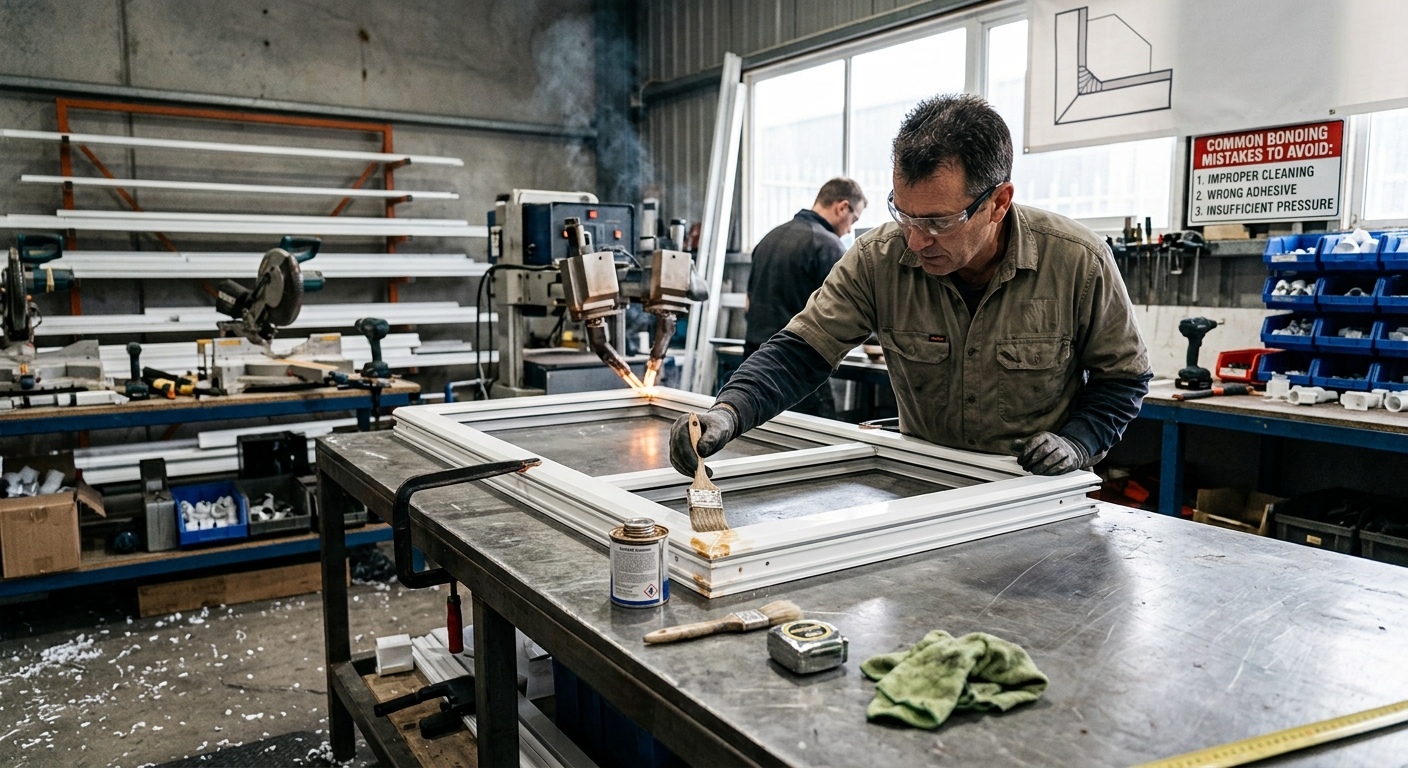
Walk into any busy PVC or UPVC fabrication workshop and you'll see the same rhythm everywhere: profiles being cut, corners being welded, trims being fitted, and accessories being bonded into place before a window or door frame moves down the line. It looks routine, but bonding is one of the most failure-prone steps in the entire process. A weak bond doesn't always show up on day one — it shows up six months later, when a trim lifts, a gasket peels, or a reinforcement strip rattles loose after the first heatwave.
Most of these failures trace back not to bad materials, but to bad habits around how PVC bonding adhesive is chosen, stored, and applied. Here's a look at the mistakes that turn up again and again on the shop floor — and what experienced fabricators do differently.
Mistake #1: Treating All Adhesives as Interchangeable
PVC and UPVC are chemically different from wood, metal, or general plastics, and they behave differently under heat, UV exposure, and mechanical stress. Using a generic multipurpose glue instead of a purpose-built UPVC adhesive is one of the fastest ways to end up with bond failure.
A proper PVC fabrication adhesive is formulated to handle the plasticizers in PVC compounds, resist yellowing under UV, and maintain flexibility across a wide temperature range — something a standard adhesive simply isn't built for. If your bonded joints are failing at a consistent rate, the first question to ask isn't "did we apply it wrong?" It's "did we pick the right adhesive for this substrate?"
Mistake #2: Skipping Surface Preparation
PVC profiles often carry a fine layer of dust, mold-release residue, or surface oxidation straight off the extrusion line. Bonding directly onto this layer without cleaning or degreasing it is one of the single biggest causes of premature failure — the adhesive bonds to the contamination, not to the profile itself.
A quick wipe-down with an appropriate cleaner before applying adhesive takes seconds but dramatically improves long-term adhesion. In high-volume workshops, this step is easy to rush under production pressure, but it's rarely worth the shortcut.
Mistake #3: Inconsistent Bead Size and Application Pressure
Bonding trims, beadings, and accessories onto window and door frames requires a consistent adhesive bead — too little, and you get gaps and weak points; too much, and you get squeeze-out that has to be cleaned up, wasting material and time. This is especially common when workers switch between adhesive types or brands without adjusting technique.
This is where an instant adhesive for PVC profiles earns its reputation in fast-paced workshops: a controlled, fast-tacking formulation reduces the margin for error because the bond sets before misalignment or excess pressure can distort it. Standardizing nozzle size, bead width, and applicator pressure across the team — regardless of which station is working — removes a huge source of variability.
Mistake #4: Ignoring Cure Time Under Production Pressure
Deadlines push fabricators to move a bonded joint down the line before it's had time to properly set. This is one of the most common — and most avoidable — mistakes in the workshop. Even a fast-curing adhesive for PVC windows & doors needs a minimum handling time before the joint can take stress, and moving, stacking, or packing frames too early can shift the bond before it fully develops.
The fix isn't necessarily slowing down production; it's building the adhesive's actual cure profile into the workflow. If your instant adhesive reaches handling strength in under a minute, sequence your stations so that gap is naturally absorbed rather than skipped.
Mistake #5: Wrong Storage Conditions
Adhesives are chemical products with defined shelf lives and storage requirements — usually a specific temperature range and protection from direct sunlight or moisture. In many workshops, adhesive containers sit near heat sources, open windows, or on shop floors where temperature swings are significant.
Degraded adhesive doesn't always look different. It may still flow and apply normally but bond weaker or cure inconsistently. Rotating stock (first in, first out), keeping containers sealed between uses, and storing them per the manufacturer's guidelines protects the investment already made in choosing the right PVC bonding adhesive in the first place.
Mistake #6: One Adhesive for Every Application
Window and door fabrication involves several distinct bonding tasks — sealing trims, fixing accessories, joining reinforcement components, bonding gaskets — and each has different stress, flexibility, and exposure requirements. Using one all-purpose adhesive across every application is a common cost-saving decision that often backfires in returns and rework.
A more reliable approach is matching adhesive type to task:
- Trims and beadings – fast-tacking, flexible adhesives that resist vibration
- Accessories and hardware fixing – higher initial grab strength
- Reinforcement bonding – adhesives rated for structural load and temperature cycling
- Gasket and seal bonding – adhesives that stay flexible without becoming brittle over time
Mistake #7: Not Training the Whole Team the Same Way
Even the best PVC fabrication adhesive underperforms if application technique varies from worker to worker. Bonding is often treated as a simple, low-skill task, but small differences — bead placement, clamping time, ambient workshop temperature — add up across a production run.
Workshops that see the fewest bonding-related returns tend to have one thing in common: a documented, repeatable application process that every operator follows, regardless of experience level.
Building a More Reliable Bonding Process
None of these mistakes require an expensive fix — most come down to consistency: the right adhesive for the right substrate, clean surfaces, controlled application, respected cure times, and proper storage. For workshops fabricating high volumes of PVC and UPVC windows and doors, standardizing around a dependable instant adhesive for PVC profiles and building a few checkpoints into the production line can eliminate the majority of bonding-related rework and callbacks.
Bonding may only be one step in the fabrication process, but it's often the step that determines whether a window or door performs reliably for years — or comes back as a warranty claim within months.
How Teraxo Helps PVC & UPVC Fabricators Get It Right
At Teraxo Adhesives, we work directly with window and door fabrication units, and the mistakes above are the ones we're called in to fix most often. Our cyanoacrylate range is built with these exact production realities in mind:
- FX40 – Premium Grade is formulated with zero whitening for clear PVC trims, beadings, and visible joints where appearance matters as much as strength.
- R40 – Hardware & General Purpose Grade is a dependable, fast-tacking option for bonding accessories, hardware, and fittings across a high-volume line.
- AS40 – Activator Spray helps difficult or low-surface-energy PVC compounds bond instantly, cutting down on the surface-prep failures many workshops run into.
Every Teraxo formulation goes through batch-wise quality checks with a stated 6–12 month shelf life, so the adhesive performing on your test bench is the same adhesive performing on your production floor months later.
If bonding failures are showing up as returns, rework, or warranty claims in your PVC or UPVC fabrication line, our team can recommend the right grade for your specific application — trims, accessories, reinforcement, or gaskets. Get in touch with Teraxo