Inside a Footwear Factory: The Bonding Challenges That Slow Down Production
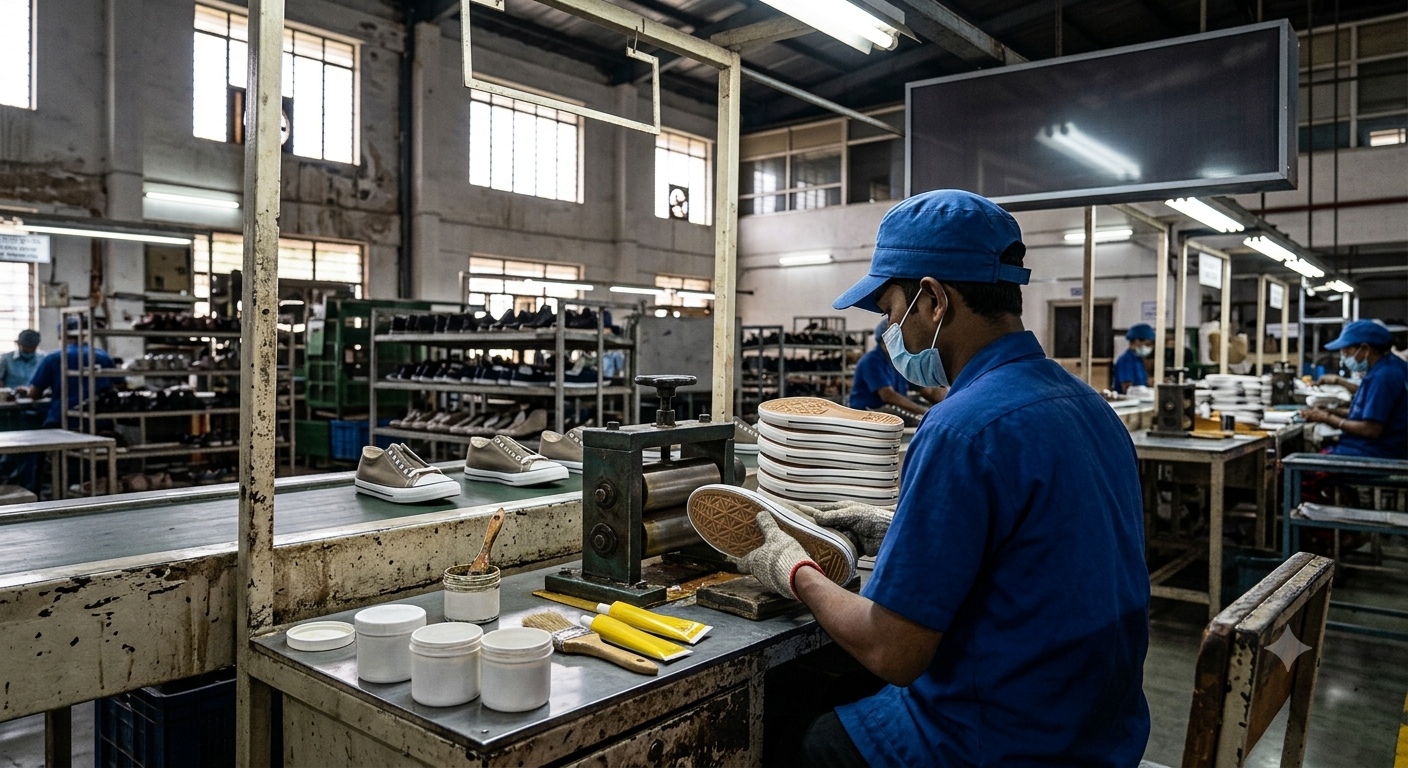
Walk down any footwear assembly line and you'll notice the same pattern: cutting and stitching move quickly, but the line often stalls right at the bonding station. Adhesive-related bottlenecks are one of the most common — and most overlooked — reasons footwear manufacturers miss daily production targets. Understanding where bonding goes wrong, and how the right adhesive changes the equation, is the first step toward a faster, more reliable production floor.
Why Bonding Is the Real Bottleneck in Footwear Assembly
Sole attachment, upper lamination, and lining bonding all depend on adhesive performance — not just machine speed. A skilled operator can prep and position a shoe in seconds, but if the bond needs several minutes to set before the next process step, that operator is left waiting. Multiply that delay across hundreds of pairs a day, and it becomes clear why so many plants are searching for a better adhesive for shoe manufacturing rather than simply adding more labor or machinery.
Unlike stitching or cutting, bonding quality isn't always visible immediately. A weak or improperly cured bond might pass initial inspection and only fail later — during quality control, in transit, or worse, after the shoe reaches a customer. That hidden risk is what makes adhesive selection such a high-stakes decision for production managers.
Common Assembly-Line Issues Tied to Adhesives
A few recurring problems show up on almost every factory floor:
- Inconsistent bond strength — caused by adhesives that react differently to temperature, humidity, or surface material (leather, EVA, rubber, synthetics).
- Contamination sensitivity — dust, oils, or mold-release agents on soles and uppers weakening adhesion before bonding even happens.
- Operator variability — manual adhesive application leading to uneven coverage and unpredictable results from one pair to the next.
- Poor substrate compatibility — a general-purpose glue struggling to bond dissimilar materials like rubber outsoles to fabric uppers.
Each of these issues traces back to one root cause: using an adhesive that wasn't engineered for the specific demands of footwear production.
The Curing Time Problem
Curing time is where most efficiency gets lost. Traditional adhesives often require extended pressing, clamping, or resting periods before a shoe can move to the next station. On a high-volume line, this creates a queue effect — finished uppers and soles pile up at the bonding station while they wait to set.
This is exactly why demand has grown for instant adhesive for footwear industry applications. A fast-setting adhesive that reaches handling strength within seconds — rather than minutes — lets the line keep moving without sacrificing bond integrity. For factories running multiple shifts, shaving even 20–30 seconds off the cure time per pair adds up to a meaningful jump in daily output.
Rework: The Hidden Cost Most Factories Underestimate
Rework rarely gets the attention it deserves in efficiency conversations, but it's often more expensive than the original delay. When a sole bond fails quality inspection — due to peeling edges, visible gaps, or weak adhesion — that shoe has to be reworked or, worse, scrapped. This means:
- Re-cleaning the bonding surface
- Reapplying adhesive
- Re-curing and re-inspecting
Every reworked pair consumes labor hours and adhesive material a second time, while also disrupting line flow for everything behind it. Factories that switch to a reliable adhesive for sole bonding typically see rework rates drop significantly, simply because the bond holds correctly the first time.
Choosing the Right Adhesive for Sole Bonding
Sole bonding is arguably the most demanding adhesive application in footwear manufacturing. The bond has to withstand flexing, weight-bearing pressure, temperature swings, and repeated impact — all while bonding materials that don't naturally adhere well to each other, like rubber to leather or EVA foam to synthetic uppers.
A well-formulated sole adhesive should offer:
- Fast initial tack for quick handling
- Full cure strength that holds up under flex-fatigue testing
- Resistance to heat, moisture, and chemical exposure
- Consistent performance across different sole materials
Getting this one application right often resolves a large share of a factory's overall bonding problems, since sole attachment tends to be the highest-volume bonding step on the line.
Why the Right Industrial Adhesive for Footwear Assembly Matters Beyond the Sole
While sole bonding gets the most attention, footwear assembly involves multiple bonding points — lining to upper, foam padding, heel counters, toe puffs, and reinforcement layers. Using a mismatched adhesive at any of these points can create the same delays and rework problems seen in sole bonding.
This is why more manufacturers are standardizing on a single, versatile industrial adhesive for footwear assembly across multiple stations, rather than juggling several products for different materials. Standardization simplifies training, reduces application errors, and makes quality control more predictable across the entire line.
What to Look for in a Footwear Adhesive Manufacturer
Not every adhesive supplier understands the specific pressures of a footwear production line. When evaluating a footwear adhesive manufacturer, production teams should look beyond the technical data sheet and consider:
- Application-specific formulations — adhesives designed for footwear substrates, not generic industrial bonding.
- Batch consistency — so bond performance doesn't vary week to week.
- Technical support — a manufacturer that can troubleshoot bonding issues on-site or remotely.
- Scalability — supply reliability that keeps up with production volume, including during peak seasons.
A manufacturer that treats adhesive as a commodity will rarely solve the layered problems footwear factories actually face. A manufacturer that treats it as an engineering partnership usually will.
How Teraxo Helps Footwear Manufacturers Solve These Challenges
At Teraxo, adhesive formulations are built specifically around the realities of footwear production — fast curing for line speed, strong substrate compatibility for sole bonding, and consistent batch performance to reduce rework. Whether the priority is cutting curing time, minimizing quality-control rejections, or standardizing adhesive use across multiple assembly stations, Teraxo's range is engineered to keep footwear lines moving instead of waiting.
For manufacturers evaluating a new adhesive for shoe manufacturing or looking to replace an underperforming sole adhesive, the conversation usually starts with the same question: where exactly is the line losing time? That answer points directly to the right product fit.
Final Thoughts
Bonding challenges are rarely about a single bad batch of glue — they're usually a sign that the adhesive being used wasn't matched to the materials, speed, or scale of the production line. Addressing curing time, rework, and substrate compatibility head-on, with adhesives built specifically for footwear assembly, is often the fastest way to unlock real efficiency gains without adding new machinery or headcount.