How Adhesives Improve Sustainability in Industrial Production
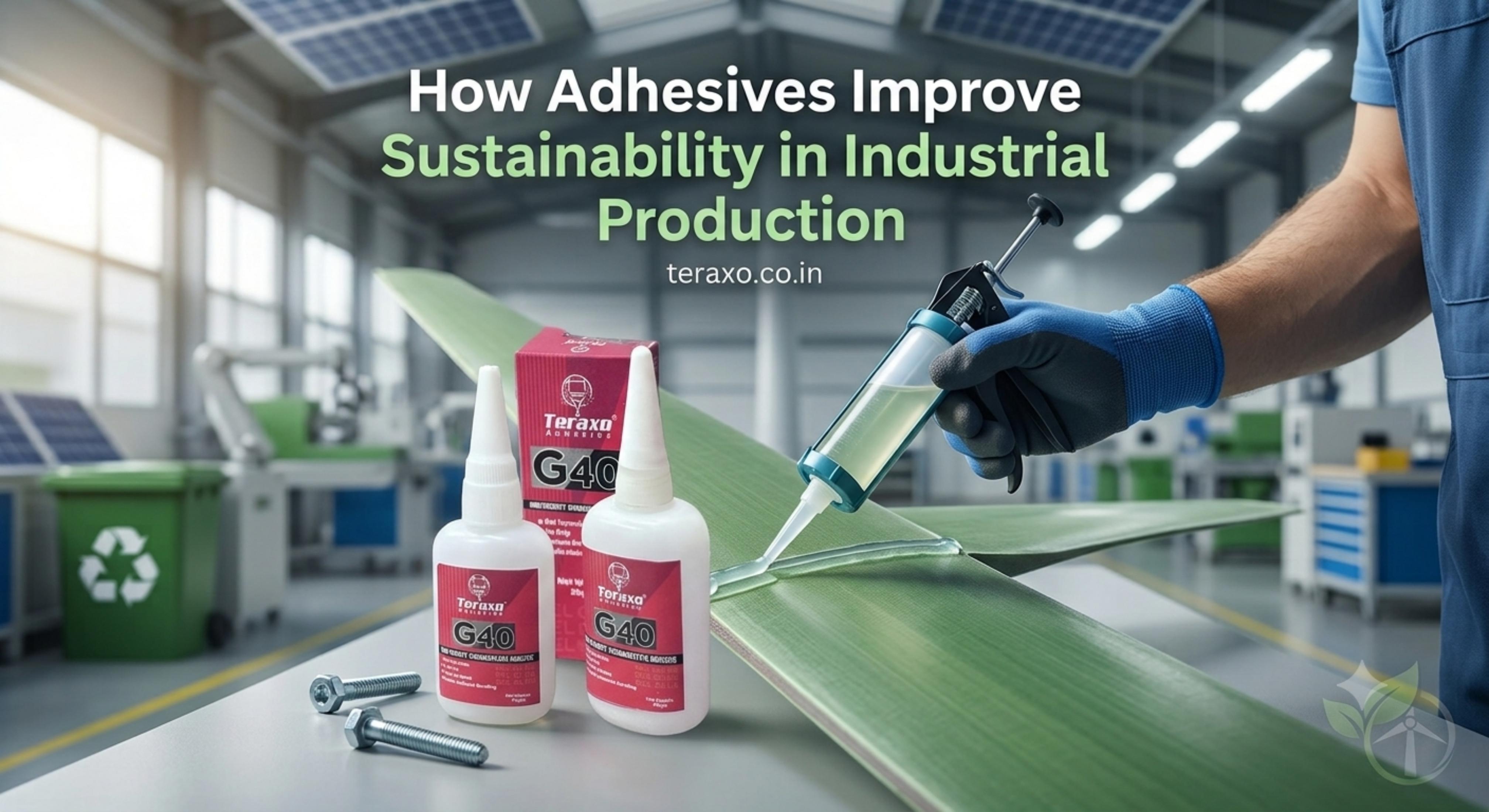
Your buyers are asking about carbon footprint, your auditors want waste data, and your production manager still has to hit the numbers. Sustainability pressure on factories is no longer a trend. It is now a purchasing criterion. Yet many plants overlook one of the simplest levers they have: how their products are joined together.
The right industrial adhesive supplier can help you cut material use, energy consumption, rework and product failure, often without changing your core process. This guide explains how adhesives support greener production, where they deliver the biggest gains, and how to choose a partner who can back it up.
In short: modern industrial adhesives make products lighter, more durable and faster to produce, and that is a practical route to more sustainable manufacturing.
Why Your Industrial Adhesive Supplier Is Part of Your Sustainability Strategy
Sustainability in manufacturing usually comes down to four things: using fewer raw materials, using less energy, producing less waste, and making products that last longer. Adhesives touch all four.
Unlike welding, riveting or screwing, adhesive bonding spreads load across the whole joint. This allows thinner materials, supports mixed-material designs and reduces the number of parts. Many modern formulations also cure at room temperature, which removes the need for heat-intensive processes.
A reliable adhesive manufacturer in India also shortens your supply chain. Local sourcing means lower transport emissions, quicker replenishment and technical support in your own time zone.
Replacing Mechanical Fasteners With Bonding
Screws, bolts and rivets add weight, require drilling and create stress points. Adhesives bond dissimilar materials such as metal to plastic, rubber to metal and wood to laminate without those drawbacks.
Actionable tips:
- Audit your assembly line for joints that use fasteners only because bonding was never tested.
- Pilot adhesive bonding on one non-critical joint before scaling.
- Ask your supplier for lap-shear and peel-strength data for your specific substrates.
Mini-case (illustrative): An enclosure maker replaces eight screws per unit with a structural bead and two spot bonds. Drilling, screw inventory and one assembly station are eliminated, and the lighter unit cuts freight weight across thousands of shipments.
Furniture Manufacturing Adhesive: Less Waste, Better Boards
Furniture is a high-volume, material-intensive sector, so small efficiencies add up. A well-chosen furniture manufacturing adhesive improves panel lamination, edge banding and veneer bonding, which reduces rejects caused by delamination, bubbling or edge lift.
Strong bonding also lets manufacturers use engineered wood, MDF and particleboard with confidence, making better use of timber resources than solid wood alone.
Actionable tips:
- Match the adhesive to your board type and pressing method.
- Control open time and spread rate to avoid overapplication, which wastes adhesive and slows curing.
- Track reject rates before and after switching products.
Mini-case (illustrative): A cabinet unit sees frequent edge-band failures in humid months. Switching to a moisture-resistant formulation and tightening spread-rate controls reduces returns, and each avoided return saves board, transport and rework.
Rubber-to-Metal Bonding Adhesive: Longer Life, Fewer Replacements
Gaskets, vibration mounts, seals, rollers and bushings all depend on a strong rubber-to-metal bond. When that bond fails, the whole part is scrapped, often along with the metal component.
A high-performance rubber-to-metal bonding adhesive extends service life under vibration, heat and chemical exposure. Longer-lasting parts mean fewer replacements, less downtime and less scrap going to landfill.
Actionable tips:
- Prepare surfaces properly (degreasing, abrading or priming), because most bond failures begin at the surface.
- Test the bond under real operating temperatures and fluids.
- Record failure modes. Rubber tearing before the bond fails is a good sign.
Mini-case (illustrative): A manufacturer of machine mounts finds the bond line failing at the metal interface. Better surface preparation and a compatible adhesive system lengthens replacement intervals, so fewer mounts are made, shipped and discarded.
Fast-Curing and Instant Adhesives: Saving Time and Energy
Speed is a sustainability factor too. A fast-curing industrial adhesive shortens fixture time, frees up workstations and reduces the energy spent on clamps, presses and ovens.
This is where a cyanoacrylate adhesive manufacturer or instant adhesive manufacturer earns its place. Cyanoacrylates bond in seconds, need only a thin film and work well on plastics, rubber, metals and many small components.
Actionable tips:
- Use cyanoacrylates for small, precise bonds and pair them with primers for low-surface-energy plastics.
- Apply a thin, controlled film, since more adhesive does not mean a stronger bond.
- Store product as directed and use dispensing systems to cut waste.
Mini-case (illustrative): An electronics assembly line replaces slow-curing adhesive on small plastic parts with an instant adhesive. Throughput rises, work-in-progress inventory falls, and the oven step is dropped, saving electricity every shift.
Waterproof Industrial Adhesive: Durability Is Sustainability
The most sustainable product is the one that does not need replacing. A waterproof industrial adhesive protects joints from moisture, humidity, washdowns and outdoor weathering, which are common causes of premature failure in packaging, furniture, automotive parts and construction components.
Actionable tips:
- Specify water, temperature and chemical resistance requirements before selecting a product.
- Run soak and humidity tests that reflect real use.
- Ask for technical data sheets rather than relying on marketing claims.
Mini-case (illustrative): Outdoor panels bonded with a standard adhesive lose strength after monsoon exposure. Moving to a waterproof formulation extends field life and reduces warranty claims, material waste and repeat shipments.
How to Choose an Industrial Adhesive Supplier for Sustainable Production
Product performance matters, but so does the partner behind it. When comparing an industrial adhesive supplier, look for:
- Technical support: application guidance, trials and troubleshooting.
- Product range: one source for cyanoacrylate, structural, rubber-bonding and wood adhesives simplifies procurement.
- Consistency: batch-to-batch quality keeps scrap low.
- Supply reliability: dependable lead times and stock availability.
- Flexible volumes: options for industrial adhesive wholesale orders reduce packaging waste and unit cost.
- Local presence: a manufacturer in India shortens logistics and response times.
Quick evaluation checklist: request samples, run a side-by-side trial, measure reject rate, cycle time and adhesive consumption, and compare total cost, not just price per kilogram.
Frequently Asked Questions
1. How do adhesives make manufacturing more sustainable?
Adhesives reduce material use, enable lighter designs and often cure at room temperature, which saves energy. They also bond dissimilar materials, supporting longer-lasting products and less waste.
2. What is the best adhesive for rubber-to-metal bonding?
The best choice depends on the rubber type, metal, surface preparation and operating conditions. Specialised rubber-to-metal bonding adhesives, applied to a properly prepared surface, give the most durable results.
3. Are cyanoacrylate adhesives suitable for industrial use?
Yes. Cyanoacrylates bond in seconds and suit small, precise assemblies in plastics, rubber and metals. For gap-filling or high-moisture applications, other adhesive types may be better.
4. What should I look for in an adhesive manufacturer in India?
Look for consistent quality, a broad product range, technical support, reliable supply and wholesale options. Requesting samples and data sheets is the quickest way to verify performance.
5. Does a fast-curing adhesive really save energy?
Often, yes. Shorter cure times reduce clamping, pressing and oven use, and speed up throughput, so less energy is used per unit produced.
Conclusion: Bond Smarter, Build Greener
Sustainable production does not always require a costly overhaul. Sometimes it starts with a better joint. The right adhesive can lighten your products, extend their life, speed up your line and cut waste. The right industrial adhesive supplier will help you get there with data, trials and support.
Ready to make your production line more efficient and sustainable? Explore industrial adhesive solutions at teraxo.co.in, request a sample, or contact the team to discuss your application.